
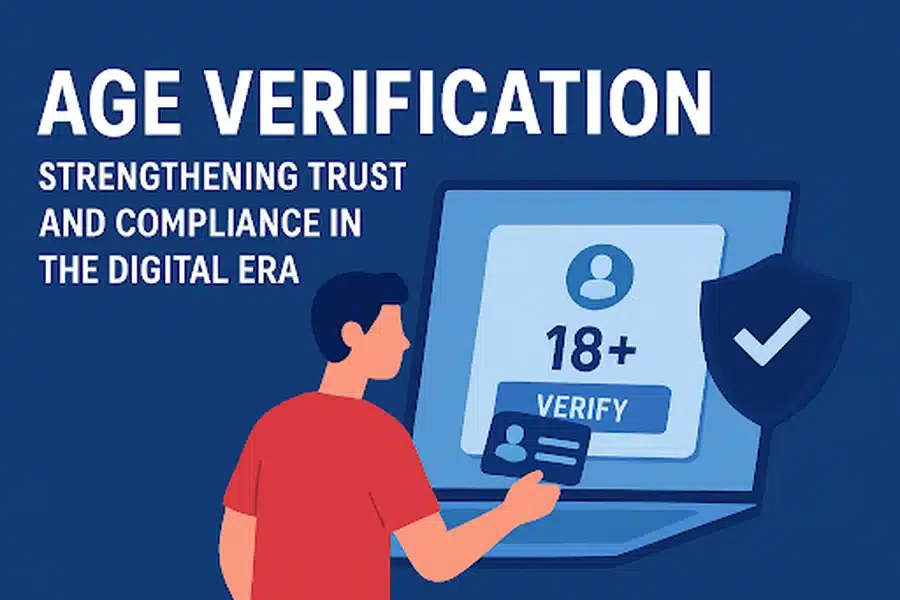
In the modern digital economy, age verification has become an important requirement in online companies in different industries. As online shopping, online games, online streaming services, and online markets emerge, consumers are now having the access to goods and services previously found in brick-and-mortar stores at any time they please. Yet, the ease has also brought some novel dilemmas especially in the context of restricting access to age-restricted materials and goods to minors. To solve these issues, businesses are becoming more inclined to use age verification systems based on digital identity verification technologies. An effectively applied solution does not only protect young users, but it also assists businesses to gain trust, compliance, and mitigate legal and reputational risks.
The Increased Significance of Online Age Checking
The online world has presented businesses with unmatched possibilities to access the entire world. With this expansion, the need to have even tougher control policies on the access to restricted content, including online gambling, alcohol sales, tobacco products, and adult entertainment, is also increasing. The absence of the age verification online can expose the company to the risk of being serving the underage users, a circumstance that can incur the company hefty fines, lawsuits, and a significant reputation. Regulators and governments across the globe have made laws stricter to enforce strict compliance by businesses. Consequently, the implementation of age verification software has ceased to be a voluntary measure and a crucial element of online business.
The functionality of Age Verification Systems
An age verification system works by verifying a user identity and date of birth with the help of sophisticated technologies. Rather than using only manual procedures, the current systems have become integrated with digital identity verification, such as biometric authentication, facial recognition, and live document reading. As an example, when a customer buys age-restricted items online he/she might be requested to scan a government-issued ID. The software which runs on AI then cross-checks the document against biometric markers which makes sure that the document is accurate and compliant. Through this process, the businesses will avoid cases of fraud, identity theft, and ensure that only qualified individuals are able to access the restricted services.
The Age Verification Software in Compliance Role
International industries are governed by various laws, and laws on compliance vary in different regions. In the United States, minors are guarded by laws against harmful content (like COPPA Children Online Privacy Protection Act), whereas in Europe there is the GDPR where the priority is on privacy and data security. Financial and digital services In financial and digital services, identity checks are also mandated by AML (Anti-Money laundering) and KYC (Know Your Customer) regulations in terms of transactions and onboarding. These compliance are aided by age verification software as they form a wider identity verification solution. Companies that incorporate the use of online age verification into their systems not only do not violate the rules but also show their accountability to their consumers.
The Pros of Digital Identity Verification within Age-Restricted Markets
The benefits of age checking by using digital identity verification are more than compliance. To begin with, it minimizes the chances of fraud since the minors will not be able to access restricted goods or services under the stolen credentials. Secondly, it helps enhance the legitimate user onboarding experience because it is fast, smooth, and secure. It is true that customers are getting more and more demanding of efficient digital interaction, and companies that offer effective verification procedures enhance loyalty and trust. Thirdly, automated verification is very affordable in terms of operations. Companies do not need to spend staff time on manual reviews since they can use AI-based software that can handle the requests of thousands of people in real time. This security, efficiency and customer satisfaction make online age verification a worthwhile investment.
Problems with Age Verification Implementation
Although it is evident that the advantages are evident, age verification systems also present some challenges to businesses. Data privacy is one of the main issues. Customers might be reluctant to post sensitive documents over the internet because they are afraid that the information can be abused or violated. To deal with this, firms should implement verification software that is encrypted, encrypted data, and privacy laws. The other difficulty is to balance between security and user experience. Too complicated verification may scare users away from increased abandonment. As such, companies have to choose age verification software that provides good security without reducing convenience.
The Future of Age Checking Techs
With age-checking technology entering a new stage of digitalization, the future of age verification is bound to become more complex. Identity verification solutions are being incorporated with artificial intelligence, machine learning, and blockchain, which will be used to improve speed, accuracy, and fraud detection. As an example, AI algorithms are capable of uncovering the slightest indications of document manipulation, whereas blockchain can store secure identity information in a decentralized manner. Biometric technologies such as the use of facial recognition and fingerprint scanning are also becoming popular as trusted forms of real-time checking. On top of this, regulators are likely to increase compliance rules forcing companies in all sectors to use more sophisticated systems. These two innovations coming together guarantee that age verification will continue to be at the heart of establishing secure, transparent, and trustful digital interactions.
The reason why businesses cannot afford to overlook age verification
The risks of the failure to verify the age goes beyond the fines and penalties. The long term cost of reputational damage can be a lot more expensive. The awareness of online safety is growing among customers and they are attracted to businesses that take compliance seriously. A company that does not defend minors or stops fraud will never be trusted by the customers ever again. Conversely, companies which apply secure and effective age verification online are responsible, reliable and customer-focused. Age verification plays an important role of protecting both the companies and the consumers whether in the context of e-commerce, gaming, financial services and streaming.
Conclusion
Age checking is a new essential part of online shopping. With the implementation of modern age verification systems along with digital identity verifications tools, companies will achieve the enforcement of international rules, protection of vulnerable users, and fraud reduction. The transition to AI-based and automated verification is indicative of the necessity of quicker and safer solutions that are convenient to the customer and comply with the regulations. With the ongoing advancement in technology, businesses investing in effective age verifying software will not just be able to comply with the regulations but create safer online experiences, gain consumer confidence, and establish a competitive advantage in the worldwide market.

David Lee is a seasoned writer specializing in filming locations. With a keen eye for detail and a passion for cinema, David explores the stories behind iconic sites and shares unique insights that bring your favorite films and series to life.