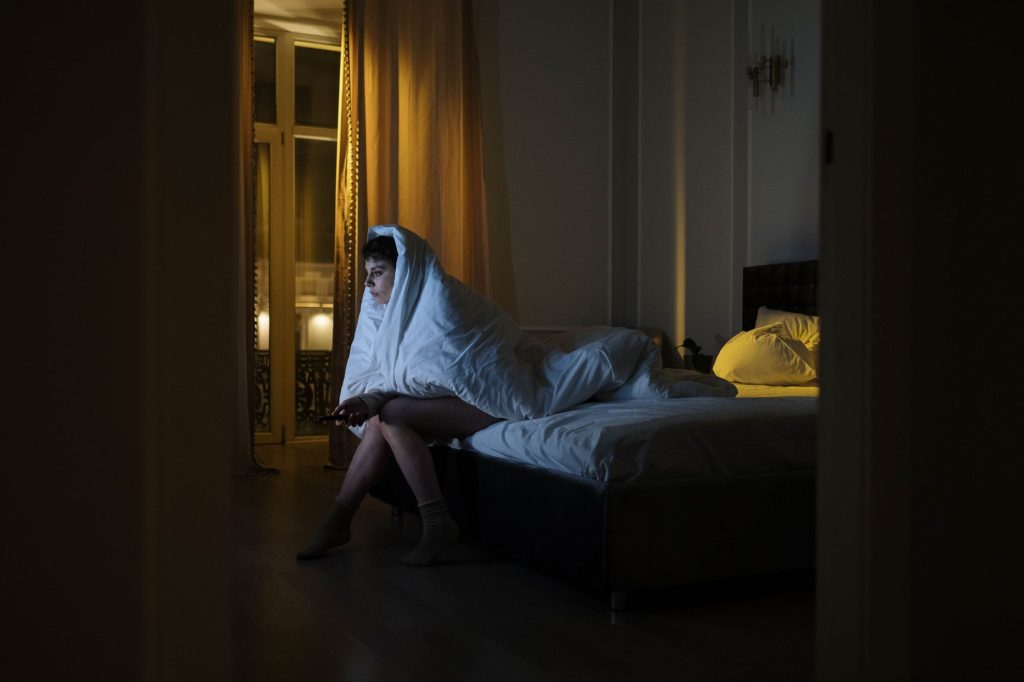
Lying awake at 2 a.m. with your mind running through every worst-case scenario is exhausting in a way that feels almost cruel. You are tired. Your body wants to sleep. But your brain refuses to cooperate. For millions of people, this is not an occasional bad night; it is a pattern that repeats night after night, quietly eroding mood, focus, and physical health. Understanding why anxiety hijacks sleep so effectively is the first step toward breaking that cycle.
This article covers the biological reasons anxiety and insomnia are so tightly linked, the most common mistakes people make when trying to fix the problem, and a range of practical techniques that research actually supports. Whether your anxiety is mild and situational or something you have struggled with for years, there is genuinely useful information here.
The Biology Behind Anxiety and Sleeplessness
Anxiety is, at its core, a threat-detection system. When your brain perceives danger, real or imagined, it activates the sympathetic nervous system and triggers a release of stress hormones including cortisol and adrenaline. Heart rate increases. Muscles tense. Breathing becomes shallower. Every one of those physiological changes is designed to help you outrun a predator. None of them are designed to help you drift off to sleep.
The problem is that the modern brain cannot always distinguish between a genuine physical threat and a looming work deadline or a difficult conversation you keep replaying. The alarm system fires anyway. And because bedtime is often the first quiet moment in a busy day, it is also the moment when intrusive thoughts tend to surface without distraction to suppress them. Darkness and stillness remove the buffers.
Sleep deprivation then makes anxiety worse the following day. Research published by UC Berkeley found that a single sleepless night can increase anxiety levels by up to 30 percent. The amygdala, the brain region most associated with fear responses, becomes significantly more reactive after poor sleep, while the prefrontal cortex, which normally helps regulate those reactions, becomes less effective. The result is a feedback loop: anxiety disrupts sleep, and lost sleep amplifies anxiety.
Common Sleep Hygiene Mistakes People With Anxiety Make
A lot of standard sleep advice is given without accounting for the specific challenges anxiety creates. Some well-meaning tips can actually backfire. Knowing what to avoid is as useful as knowing what to try.
- Watching the clock: Checking the time repeatedly when you cannot sleep increases performance anxiety around sleep itself, making it harder to relax. Turning the clock face away or removing it from view is a small but meaningful change.
- Using the bed for worry: If you lie in bed scrolling through stressful news or mentally rehearsing problems, your brain begins to associate the bed with alertness rather than rest. This is a conditioned response that builds over time.
- Trying harder to sleep: Sleep is not something you can force. The act of trying intensely to fall asleep activates the same arousal systems that keep you awake. Paradoxical intention, which involves deliberately staying awake without effort, has shown measurable benefit in clinical studies.
- Compensatory napping: Long daytime naps after a rough night feel necessary but often reduce sleep pressure the following night, perpetuating the cycle.
- Alcohol as a sedative: Alcohol may help you fall asleep faster but consistently disrupts the second half of the sleep cycle, reducing REM sleep and increasing nighttime awakenings.
Evidence-Based Techniques That Can Help
There is a meaningful difference between techniques that feel intuitively calming and techniques that have been tested in controlled research. The strategies below have meaningful support from clinical literature, though individual results always vary.
Cognitive Behavioral Therapy for Insomnia
Cognitive Behavioral Therapy for Insomnia, commonly called CBT-I, is widely considered the most effective long-term treatment for chronic sleep problems tied to anxiety. Unlike medication, which addresses symptoms, CBT-I targets the thoughts and behaviors that sustain the insomnia cycle. A 2015 meta-analysis published in the Annals of Internal Medicine found that CBT-I outperformed sleep medications on most measures of sleep quality and had more durable results over time. It typically involves sleep restriction, stimulus control, cognitive restructuring, and relaxation training, usually delivered over six to eight sessions with a trained therapist.
Breathing and Relaxation Practices
Controlled breathing techniques directly activate the parasympathetic nervous system, which is the physiological counterpart to the fight-or-flight response. Diaphragmatic breathing, where you breathe slowly and deeply into the belly rather than the chest, can lower heart rate and reduce the subjective feeling of anxiety within minutes. A specific pattern called 4-7-8 breathing, inhale for four counts, hold for seven, exhale for eight, has become widely discussed and while large-scale trials are limited, its mechanism of slowing the breath is physiologically sound. Progressive muscle relaxation, which involves tensing and then releasing muscle groups sequentially from feet to face, is another technique with reasonable clinical backing for pre-sleep anxiety.
Scheduled Worry Time
This technique sounds counterintuitive but has real research support. The idea is to set aside a specific time during the day, not in the evening, to deliberately think through worries and write them down. When anxious thoughts arise at bedtime, you remind yourself that those concerns have a designated time and are not for now. Over time, this trains the brain to contain worry to a bounded window rather than letting it spread into the night. Studies by Penn State researchers found that consistent use of scheduled worry time reduced sleep onset difficulty in people with generalized anxiety.
Sleep Environments and Practical Adjustments
The physical environment shapes the nervous system more than people often realize. Small changes to your sleep space can reduce the baseline arousal that makes it hard to wind down.
| Factor | Recommended Range or Approach | Why It Matters |
| Room temperature | 60 to 67 degrees Fahrenheit (15 to 19 Celsius) | Core body temperature needs to drop slightly to initiate sleep; a cool room supports that process |
| Light exposure | Blackout curtains or a sleep mask; avoid bright screens 60 to 90 minutes before bed | Light suppresses melatonin production and signals wakefulness to the circadian system |
| Noise | Consistent white noise or earplugs if environment is unpredictable | Sudden sounds are more disruptive than consistent background noise; predictability matters |
| Bed use | Reserve the bed for sleep and intimacy only | Strengthens the brain’s association between bed and sleep through stimulus control |
| Pre-sleep routine | A consistent 20 to 30 minute wind-down ritual at the same time nightly | Signals the nervous system that sleep is approaching; reduces cognitive arousal |
When to Seek Professional Support
Self-help strategies work well for mild to moderate sleep difficulties tied to situational stress. But when anxiety is severe, persistent, or significantly affecting daily functioning, self-guided techniques may not be enough on their own. A mental health professional can assess whether an underlying anxiety disorder, such as generalized anxiety disorder, panic disorder, or PTSD, is contributing to the sleep problem. Treating the root cause, rather than only the sleep symptom, produces more lasting results.
Psychiatrists and therapists with specific training in sleep medicine or anxiety disorders can provide CBT-I, medication evaluation when appropriate, and tailored guidance. Resources that offer a deeper look at how to fall asleep with anxiety can also help people identify which combination of strategies suits their specific situation, since anxiety presents differently from person to person and a one-size approach rarely covers it.
It is also worth ruling out medical contributors. Conditions like sleep apnea, thyroid disorders, and chronic pain all disrupt sleep in ways that can mimic or worsen anxiety symptoms. A visit to a primary care physician to screen for these possibilities is a reasonable step if sleep problems have been ongoing for more than a few months.
Building a Sustainable Approach Over Time
Sleep improvement rarely happens overnight, and that is especially true when anxiety is involved. Expecting a technique to work after one or two attempts and then discarding it when it does not is one of the most common reasons people stay stuck. Most behavioral interventions for sleep take two to four weeks of consistent application before results become clear. Keeping a simple sleep log, noting bedtime, wake time, estimated total sleep, and mood, provides objective data that can reveal patterns not obvious from memory alone.
Reducing anxiety’s grip on sleep is not about achieving perfect nights every time. Even people who manage their anxiety well have occasional bad nights. The goal is reducing the frequency and intensity of those nights and, critically, reducing the secondary anxiety about sleep that often becomes its own problem. When sleep stops being something you dread and starts being something neutral or even something you look forward to, that shift itself tends to make falling asleep easier.
Consistency matters more than any single technique. A reasonable wind-down routine practiced every night will outperform an elaborate but irregular approach. Start with one or two changes, give them genuine time to work, and add more gradually. The nervous system responds to repetition and predictability, which is exactly what an anxiety-prone brain needs most.

David Lee is a seasoned writer specializing in filming locations. With a keen eye for detail and a passion for cinema, David explores the stories behind iconic sites and shares unique insights that bring your favorite films and series to life.