
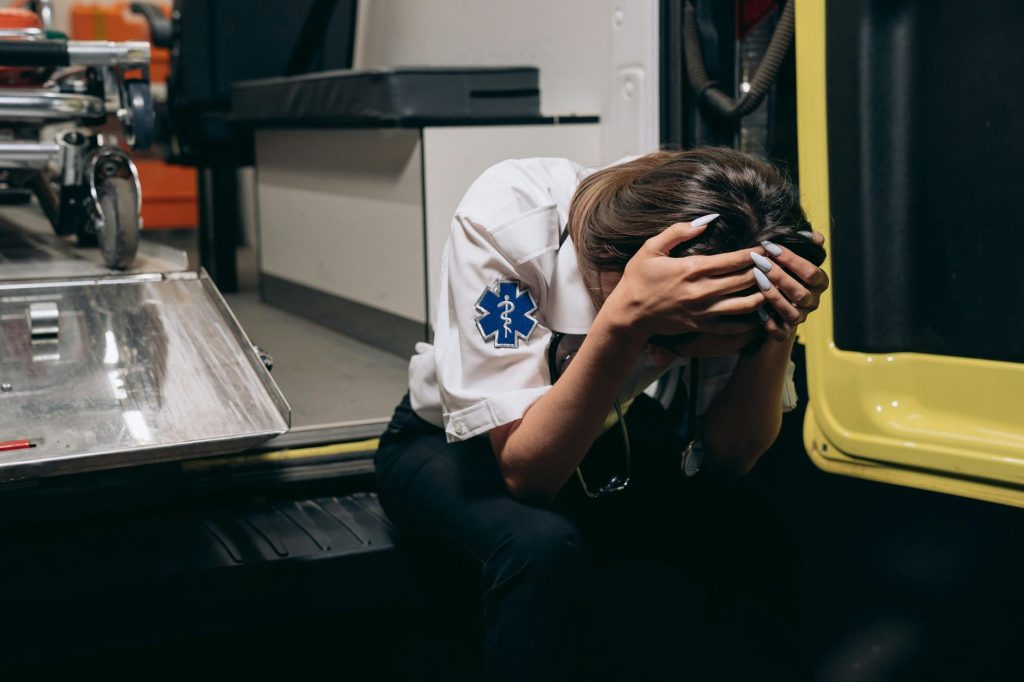
Every shift, firefighters, paramedics, law enforcement officers, and dispatchers absorb experiences that most people will never encounter in a lifetime. The cumulative weight of that exposure does not simply disappear when a shift ends. It collects. And for a significant portion of the first responder population, that collection eventually becomes a clinical problem that deserves the same attention as any physical injury sustained on the job.
This article takes a close look at the mental health challenges unique to first responders, the barriers that historically kept many from seeking care, and what effective, specialized support actually involves. Whether you are a first responder yourself, a family member, or a department administrator trying to understand your options, the information here should give you a clearer picture of the landscape.
The Mental Health Burden First Responders Carry
The statistics in this space are sobering and, unfortunately, well documented. According to a 2018 study published in the Journal of Emergency Medical Services, more firefighters and police officers die by suicide each year than are killed in the line of duty. That reversal of what many people assume is a stark indicator of how serious the problem has become.
The Ruderman Family Foundation has reported that police officers and firefighters are more likely to die by suicide than by any other cause of job-related death. For paramedics and EMTs, the situation is similarly grim. A 2015 survey published in Prehospital Emergency Care found that nearly 37 percent of EMS professionals reported contemplating suicide at some point in their careers, compared with roughly 14 percent in the general population.
These numbers do not exist in isolation. They are downstream consequences of occupational trauma exposure, chronic sleep disruption, high-stakes decision making under pressure, and a professional culture that has historically treated emotional distress as a weakness rather than a medical condition.
Why First Responders Are Wired for Stress but Not Immune to It
There is a common misconception that first responders are somehow built differently, that their training insulates them from the psychological effects of repeated trauma exposure. Training does help. It creates structure, automaticity, and a sense of control in chaotic situations. But training is not a permanent buffer against cumulative stress.
The human stress response is not selective. When the nervous system perceives a threat, it activates whether the person experiencing it is a seasoned detective or someone who has never seen anything traumatic before. The difference is that first responders experience these activations repeatedly, often without adequate recovery time between them. Over time, the nervous system can become dysregulated, producing symptoms that look like irritability, hypervigilance, emotional numbing, or difficulty sleeping.
These are not character flaws. They are physiological responses to extraordinary occupational demands. Recognizing that distinction is one of the first steps toward understanding why specialized mental health care for this population looks different from general therapy.
Common Mental Health Conditions Among First Responders
While every individual’s experience is different, certain diagnoses appear at elevated rates in first responder populations. Understanding what these conditions actually involve helps demystify what seeking care might address.
| Condition | Estimated Prevalence in First Responders | General Population Estimate |
| PTSD | Approximately 15 to 20 percent (varies by role) | Approximately 6 to 8 percent (National Center for PTSD) |
| Depression | Up to 27 percent (Journal of Affective Disorders, 2019) | Approximately 8 percent (CDC) |
| Anxiety Disorders | Elevated across all roles; exact rates vary by study | Approximately 19 percent (NIMH) |
| Substance Use Disorder | Higher rates than general population; often co-occurring with PTSD | Approximately 7 to 9 percent (SAMHSA) |
| Suicidal Ideation | Approximately 37 percent lifetime rate in EMS (Prehospital Emergency Care, 2015) | Approximately 14 percent lifetime rate (NIMH) |
What the table above illustrates is not just elevated numbers. It is a pattern. First responders are not slightly more at risk across a few categories. They are significantly more at risk across nearly all of them. That pattern argues strongly for care models designed specifically for this population rather than adapted from general mental health practice.
Barriers to Seeking Care and Why They Persist
Understanding the problem is only part of the picture. Knowing why people do not seek help is equally important, because the barriers are real and they do not disappear simply because someone acknowledges they are struggling.
Stigma Within the Culture
First responder culture has traditionally placed a high value on self-reliance, composure, and toughness. Admitting psychological distress can feel like a violation of those norms. Many officers, firefighters, and paramedics report fears that seeking therapy will be seen by peers as a sign they cannot handle the job. That fear is not always unfounded. Workplace cultures vary considerably, and in some departments, disclosure of mental health treatment has carried real professional consequences.
Concerns About Career Impact
Many first responders worry that seeking mental health treatment will result in being deemed unfit for duty, losing their badge, or being reassigned to non-field roles. The relationship between mental health treatment and fitness-for-duty evaluations is genuinely complicated, and the policies vary by agency. This ambiguity leads many people to avoid care entirely rather than risk their careers.
Lack of Culturally Competent Providers
First responders frequently report that general therapists simply do not understand the context of their work. A therapist who has no framework for understanding what a mass casualty incident actually involves, or what it means to make split-second life-or-death decisions, may struggle to build the kind of rapport that makes treatment effective. Providers who specialize in this population are trained to understand that context, which changes the therapeutic relationship considerably.
What Specialized First Responder Mental Health Care Looks Like
Specialized care for first responders is not simply standard therapy delivered to someone in a uniform. It involves clinicians who understand the occupational culture, the specific trauma exposures common to different roles, and the particular obstacles that make treatment-seeking difficult for this group. It also tends to incorporate evidence-based modalities that are well-suited to trauma, such as EMDR (Eye Movement Desensitization and Reprocessing), Cognitive Processing Therapy, and somatic approaches that address how trauma is held in the body.
Peer support programs are another component that many effective models include. Connecting someone who is struggling with a colleague who has navigated similar challenges can reduce isolation and normalize the experience of seeking help. This peer element is something general mental health systems rarely offer but that first responder-focused organizations have increasingly built into their models.
Geographic access also matters. Southern California has one of the largest concentrations of first responders in the country, and organizations serving this region have developed location-specific resources to reduce the practical barriers to care. FRCA in Santa Clarita, for example, is one resource designed to meet first responders in a specific community rather than requiring them to travel significant distances for specialized support.
Effective programs also tend to address co-occurring conditions together rather than in sequence. Treating PTSD without addressing a concurrent alcohol use disorder, or addressing depression without examining the underlying trauma that feeds it, tends to produce incomplete results. Integrated treatment models that hold multiple conditions simultaneously have shown better long-term outcomes in this population.
Practical Steps for First Responders Considering Support
Knowing that help exists and knowing how to access it are two different things. The following steps outline a practical starting point for any first responder considering mental health support.
- Identify whether your agency has an Employee Assistance Program (EAP). Many EAPs offer a limited number of confidential therapy sessions at no cost, and usage is typically not reported to your employer.
- Ask specifically for providers who have experience with first responders or occupational trauma. General directories may not flag this specialty clearly, so direct questions are often necessary.
- Research peer support programs within your department or union. These programs exist in many agencies and offer a lower-stakes entry point than formal therapy.
- Look into organizations that specialize exclusively in first responder mental health. These tend to have clinicians who understand the culture and are less likely to require extensive context-setting before treatment can begin.
- Consider whether family members should also be part of the conversation. Occupational trauma affects households, not just individuals, and many specialized programs offer family support as part of their services.
- Check whether your state has any legal protections related to mental health treatment confidentiality for first responders. Several states have passed legislation in recent years aimed at reducing the career-related fears that discourage treatment-seeking.
The Broader Case for Taking This Seriously
Public safety depends on the people who provide it. A firefighter dealing with untreated PTSD, a dispatcher managing dissociation symptoms, or a patrol officer self-medicating with alcohol is not operating at full capacity. That has consequences not just for the individual but for the communities they serve.
The good news is that mental health conditions, including PTSD and depression, are treatable. Recovery is not guaranteed and it is rarely linear, but the research on evidence-based treatment is clear. People get better. First responders, when they do access care that genuinely understands their world, report meaningful improvements in symptom burden, relationships, and quality of life.
The shift happening across the first responder community, slowly but visibly, is one where seeking help is increasingly understood as an act of professional responsibility rather than a sign of weakness. Departments that invest in mental health resources for their personnel tend to see lower turnover, fewer use-of-force incidents, and reduced disability claims. The return on that investment is measurable in ways that matter to administrators, union leaders, and the broader public alike.
Mental health is not a secondary concern for people doing this work. It is central to it. The more clearly that message gets communicated, through research, through policy, and through the lived experience of people who sought help and found it useful, the more likely it is that the next person struggling will reach out before the weight becomes unbearable.

David Lee is a seasoned writer specializing in filming locations. With a keen eye for detail and a passion for cinema, David explores the stories behind iconic sites and shares unique insights that bring your favorite films and series to life.