
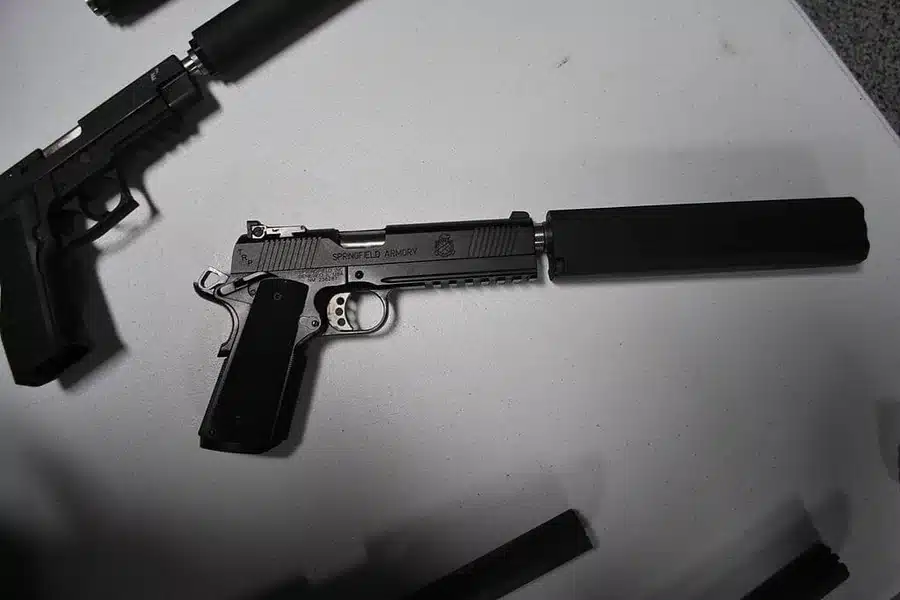
Firearm suppressors are essential tools that reduce noise and muzzle blast, benefiting recreational shooters, hunters, law enforcement and military personnel by minimizing environmental impact and hearing damage risk. The Sonoran Desert Institute (SDI), accredited by the Distance Education Accrediting Commission (DEAC), recognizes the significance of suppressors in modern firearms applications. It provides educational resources, such as webinars, to inform students about suppressor options and their integration with various firearms platforms.
A suppressor functions by slowing down and cooling the gases expelled from the barrel, thereby reducing the noise created when a bullet exits the muzzle. It achieves this by trapping and dissipating these gases, which would otherwise produce a loud “crack” upon firing. The primary goal of a suppressor is not to eliminate the sound of the gun but to lower the volume to a less disruptive level. Suppressors help reduce muzzle blast. The shockwave of hot gases creates a loud, percussive sound. For firearms using high-powered ammunition, a suppressor can significantly decrease both the decibel level and the intensity of the blast, making shooting quieter and more comfortable for the shooter and those nearby.
Principles of Firearm Suppressors: Reducing Muzzle Blast and Noise
The mechanics of a suppressor involve a combination of baffles and expansion chambers that slow down and redirect the expanding gases produced when the gun is fired. When a bullet travels through the barrel, it pushes a large volume of gas out of the muzzle at high pressure. Without a suppressor, this gas rapidly escapes into the air, creating a sharp, loud sound as it expands and compresses. A suppressor works by channeling the gas into a series of chambers and baffles that reduce the pressure and slow the release of the gas. As the gas moves through these chambers, it cools down and loses velocity, resulting in less noise upon exiting the suppressor.
Although suppressors can significantly reduce noise, they do not eliminate it. The sound of the bullet breaking the sound barrier, known as the sonic crack, is still audible when shooting supersonic ammunition. To mitigate this, some shooters use subsonic ammunition, which is designed to travel at speeds below the speed of sound and, therefore, does not produce a sonic crack. Gunsmiths can help optimize firearms for suppressors by recommending and modifying them to use subsonic ammo, ensuring that the firearm’s performance remains balanced while achieving maximum sound suppression.
Gunsmithing Techniques for Threading Barrels and Tuning Gas Systems
One of the first steps in optimizing a firearm for sound suppression is threading the barrel. Suppressors are typically attached to the firearm via threaded connections, which require precision and attention to detail. Gunsmiths use specialized tools to cut threads into the barrel, ensuring that the suppressor can be securely attached without affecting the rifle’s accuracy or integrity. The thread pitch must be precise to ensure that the suppressor sits firmly in place and aligns properly with the barrel. Gunsmiths also pay close attention to the barrel material and profile, as a properly threaded barrel helps maintain consistent shot placement and ensures that the suppressor functions as intended.
Threading is not the only modification necessary for suppressor optimization; tuning the gas system is equally important. The gas system controls the flow of gases from the barrel to the bolt carrier group, which cycles the action and prepares the firearm for the next shot. When a suppressor is added to a firearm, it can alter the gas dynamics, causing the system to turn over-gas or under-gas, which can lead to issues like excessive recoil, failures to cycle or diminished reliability. Gunsmiths address this by adjusting the gas block, which controls the amount of gas diverted from the barrel to the bolt carrier group. By tuning the gas system, gunsmiths ensure that the firearm cycles smoothly, maintains reliability and performs optimally with a suppressor.
Ensuring Reliability with Suppressors: Managing Recoil and Cycling
Adding a suppressor to a firearm can also increase backpressure, which is the pressure created when the gases are forced back into the firearm’s action. This added pressure can lead to increased recoil, reduced cycling efficiency or even malfunctions. To compensate for this, gunsmiths often modify the buffer system and buffer spring in semi-automatic firearms. Adjusting the weight of the buffer or changing the spring tension can help reduce recoil and improve the firearm’s overall reliability when using a suppressor.
Suppressors can alter the balance of a firearm, especially when it is large or heavy. Gunsmiths may recommend changing the stock or adjusting the forend to ensure that the firearm remains well-balanced and comfortable to use. It can help shooters maintain better control and accuracy, even with the added weight and changes in the firearm’s recoil characteristics.
The suppressor’s design itself also plays a role in reliability. Gunsmiths consider the type of suppressor being used and its internal configuration when making adjustments to the firearm. Some suppressors use monolithic baffles, while others use modular designs that allow users to adjust the length and volume of the suppressor based on their needs. By understanding the mechanics of different suppressor types, gunsmiths can optimize the firearm’s performance and ensure the suppressor works in harmony with the firearm’s gas system and overall design.
Sonoran Desert Institute provides students with a comprehensive education in firearms technology. While SDI’s curriculum does not include a dedicated course on suppressor science, students gain foundational knowledge in areas such as barrel threading, gas system tuning and recoil management through courses like FTE 217: Modern Sporting Rifle. These skills are essential for optimizing firearms for suppressor use, ensuring that shooters can enjoy quieter, more controlled shooting experiences without sacrificing reliability or performance.
Suppressors significantly reduce firearm noise and muzzle blast, benefiting both tactical applications and recreational shooting. By understanding the principles of suppressor design and applying proper gunsmithing techniques, such as threading barrels, tuning gas systems and ensuring reliability, gunsmiths can optimize firearms for sound suppression. With the right modifications, firearms can be adapted to work seamlessly with suppressors, making them quieter and more efficient without compromising performance.

David Lee is a seasoned writer specializing in filming locations. With a keen eye for detail and a passion for cinema, David explores the stories behind iconic sites and shares unique insights that bring your favorite films and series to life.